
Platform · Web & mobile
Uber for kids, with the duty of care built in
A child care group was moving 300 children a week on manual notes and phone calls, with the risk that carries. We built KaGo, scheduling, vetted drivers, live location and an auditable chain of custody. The business went from 3 centres to 12.
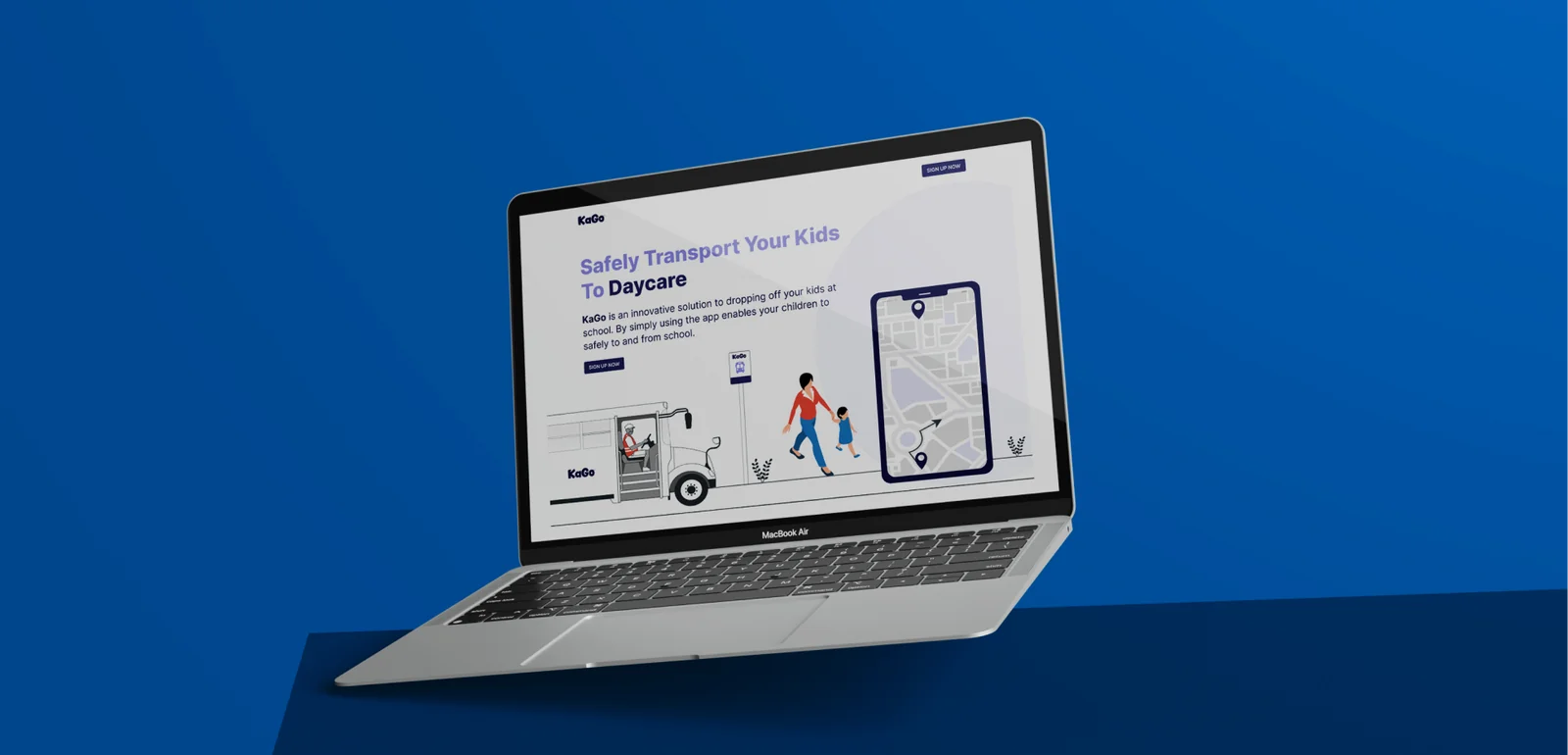
The business we started with
Our client had run three child care centres for the better part of two decades, and transport was part of the service. Parents rang in. Staff took the call, wrote it down, worked out which driver could take it, and dispatched the job by phone. The working day ran from 5am to six or seven in the evening.
At around 300 children a week, the process held together on the competence and stamina of a small number of people. It was also the source of the two risks that mattered most: staff burnout, and the possibility that a manual note goes astray and a child is left in a car.
No amount of process discipline fixes that permanently. The information simply was not in a system where it could be checked.
What we built
KaGo is Uber, but for kids, with the safety obligations that phrase implies taken seriously. It connects parents, child care providers and vetted drivers, and it digitises the parts of the job that were previously held in someone's handwriting.
- Parents request transport in the app instead of by phone
- Centres schedule the job in a system and dispatch it to a qualified, vetted driver
- Live driver location, visible to the centre and the parent
- Auditability of where drivers have been, for every journey
- Duty of care exchanges with explicit safety checks at each handover
The last two points are the ones that made this project worth doing. A duty-of-care handover that is recorded, timestamped and attributable is a different category of safety from a duty-of-care handover that someone remembers making.
Where it landed
The operational effect showed up quickly. During early testing, weekly transport went from about 300 children to roughly 2,000, volume the manual process could not have absorbed at any staffing level.
The business effect was larger. The child care operation grew from 3 centres to 12, 400% growth over three years, because the constraint had never really been demand. It had been how much coordination three people could hold in their heads before something broke.
What the founders ended up with was not just a better-run group of centres. It was a platform with a high valuation and a credible path into the wider Australian market, and eventually a global one.
Key takeaways
- The bottleneck was manual coordination, not demand, so removing it multiplied volume nearly seven-fold in testing.
- Digitised duty-of-care handovers turn a safety promise into a safety record.
- 3 to 12 centres in three years: the platform lifted the ceiling on the underlying business.
- The software became an asset in its own right, with its own valuation and market.